
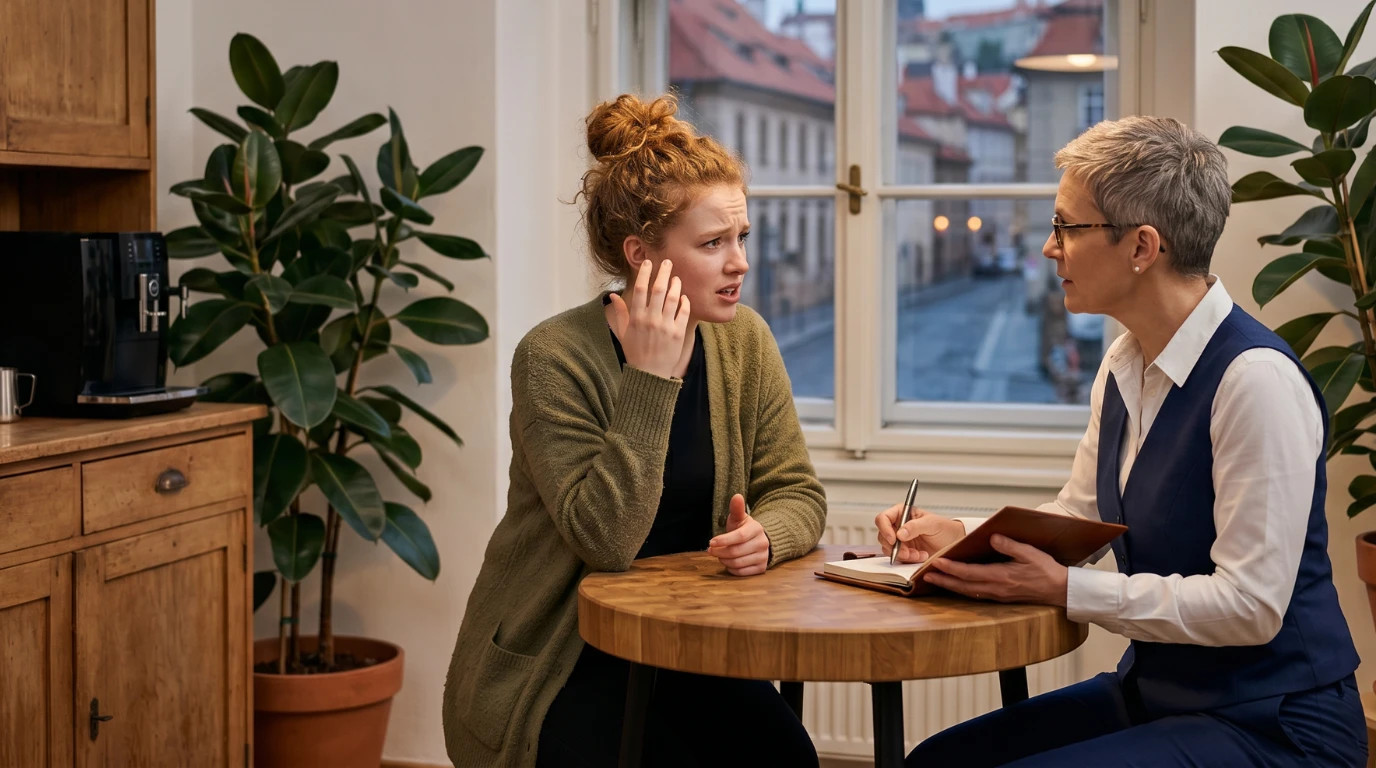
After a burnout, people often question their abilities
I have worked with quite a number of people returning to work after burnout, and their reactions and questions almost always follow the same pattern. At some point, I hear a version of the same doubts:
“What did I do wrong?” “Maybe I wasn’t strong enough.” Or, for some of them: “Maybe I’ve become fragile.”
These are competent, committed professionals. Many of them were high performers for years and believed they would never burn out. And yet, when they return, they often carry a quiet sense of personal failure.
When we unpack what actually happened
If we sit down and reconstruct the months leading up to the burnout, the story is usually not dramatic. There isn’t one catastrophic event. It is more gradual than that and that is one of the reasons it goes unnoticed.
It usually revolves around shifting priorities, projects added without others being removed, decisions taken in urgency… A constant feeling of being slightly behind.
Most people didn’t “break” because they were weak. They adapted. They compensated. They absorbed. For a long time. Until they couldn’t anymore.
The root causes were rarely addressed
For years, burnout has primarily been considered an individual issue.
Solutions such as resilience training, stress management, and emotional regulation are of course important. But they often did not address the root causes.
Because these patterns were difficult to make visible and because there were no major events that would shift attention when someone burned out, the focus naturally turned toward the individual.
What AI is quietly changing
Now, with AI-enabled work platforms like Kaamfu , work leaves a clearer footprint. Managers can not only focus on results the “what” but also begin to question patterns the “how” in real time. And that could be a major breakthrough.
AI can’t detect burnout itself. But it can highlight when the structure of work becomes unstable when accumulation is no longer occasional, but constant.
And that matters. Because it shifts the conversation from “Why couldn’t you cope?” to “What was happening in the system?”
Why this should help recovery
When someone believes they failed, they return to work smaller more cautious, sometimes afraid of their own ambition.
But when we can look at actual workload patterns and see that the situation was objectively excessive, something shifts internally. The narrative changes.
Let’s be clear: the point is not to deny individual responsibility and claim that burnout is entirely a systemic issue. That would not be accurate. We all have different capacities to handle workload and stress.
But this perspective restores proportion. It allows for a more thorough and balanced analysis.
A shift in where responsibility sits
AI will not solve burnout. And it won’t remove the need for self-awareness or boundaries.
But it may finally help us look in the right place first not at a person’s fragility, but at how work is designed, distributed, and led.
And if that shift continues, perhaps fewer people will leave a burnout experience questioning their own solidity and more organizations will begin questioning the conditions they create.
Burnout feels personal. Its roots, very often, are not.