
 Get started for free
Your AI investments are failing
because your organization isn't ready for them
Kaamfu is the operational layer that structures your work, people, and data into something AI can actually act on. Without it, every tool you add makes the problem worse.
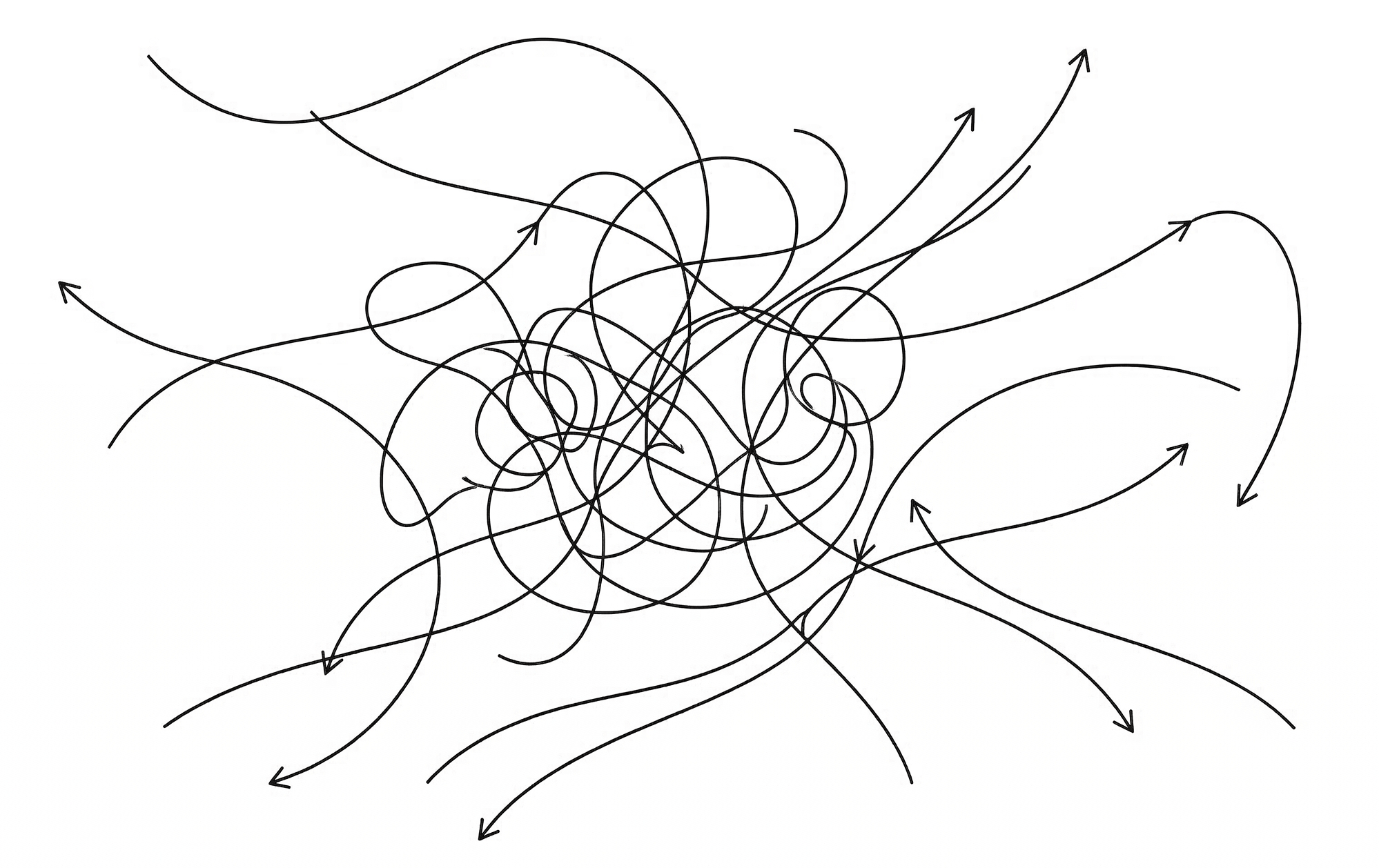
You can't automate chaos
AI cannot fix broken operations. Before AI can sequence priorities, surface risks, or drive execution, your organization needs a single operational layer where context lives, work is visible, and data is owned. That layer is what most companies are missing, and it is why their AI investments keep disappointing.
of companies are generating no material value from AI despite substantial investment.
What Kaamfu gives you
You have people, tools, and data spread across more systems than anyone can keep track of. Kaamfu pulls it into one place so you can finally see what's happening and act on it.

Unified work environment
Stop switching between systems to understand one project. Your tasks, communication, time, and progress live in one place so nothing falls through.

Operational visibility
You should never have to ask your team for a status update. Kaamfu shows you what is happening across every role and project in real time.

AI that acts on real data
Ask Kai anything about your organization and get a real answer. It works from live operational data, not last week's summary.

Data you own
Your operational data belongs to you, not your software vendor. Query it, export it, and build on it without asking permission or filing a support ticket. Read more →
Most organizations pay for five or six separate tools for project management, team chat, time tracking, activity monitoring, and AI. Kaamfu consolidates all of it. Not sure which tools you'd keep? We can map it out with you →
What your organization unlocks
at every stage
Each phase compounds what came before, and none can be skipped. Most organizations have never achieved even the second stage. Every one of them delivers real, measurable value.
Aspiration creates direction
We are committed to autonomy.
Leadership stops asking "what AI tools should we buy" and starts asking "what kind of organization do we need to become." That shift changes every decision that follows. It also sends a clear signal to your team, your stakeholders, and your board: this company has a serious plan for AI, and it starts with structure.
Autonomy becomes a board-level mandate with executive ownership, not an IT side project.
Budget, time, and leadership attention are formally assigned to structural evolution.
Technology decisions start passing through a structural lens rather than trend adoption.
Your data environment is secured. You decide who has access to your operational intelligence.
Awareness creates visibility
We know what everyone is doing at every moment.
When a project stalls on Tuesday, you know Tuesday. New hires ramp faster because the work environment carries its own context. Most organizations have never operated with this kind of visibility. The ones that get here describe it as a before-and-after moment.
Real-time operational visibility across every team, without relying on manual reporting cycles.
Shadow systems disappear. Siloed accounts and inaccessible data sources are eliminated.
The organization can trace actions, decisions, and outputs over time.
Context density builds: people, activity, decisions, and outcomes connect into one coherent record.
Alignment creates structure
Everyone is working on the highest-priority task right now.
Strategy stops living in a slide deck and starts governing daily execution. When priorities shift, the whole organization adjusts in hours. For most companies, this alone is a multi-year competitive advantage.
Strategic objectives connect to measurable execution. Goal traceability is built in.
Roles, ownership boundaries, and decision rights are clarified in operational practice.
Performance is evaluated on defined outcomes. The data is trustworthy enough to act on.
Work is performed in repeatable, documented patterns. The AI dataset is clean and real.
Acceleration creates leverage
AI is enforcing our standards, surfacing risks, and driving our work forward.
With the foundation in place, Kai reads the full operational picture and starts doing real work. Every week the system gets smarter about how your organization operates.
Kai flags misalignment between stated priorities and where effort is actually going.
End-of-day reports generate themselves. A human reviews in five minutes.
Burnout, overload, and bottlenecks surface before they escalate.
Repetitive coordination work starts disappearing from your team's day entirely.
Autonomization creates orchestration
Our systems coordinate themselves while our people govern the boundaries.
Kai manages the operational rhythm: assigning, sequencing, escalating, reporting. Humans focus on strategic exceptions and boundary conditions rather than daily task management.
Agents create tasks and initiate actions toward goals. Work starts itself.
Growth stops requiring proportional hiring. Revenue per human expands.
Workflows reprioritize dynamically based on capacity, urgency, and constraints.
Execution patterns improve through feedback loops. The organization optimizes itself.
The real cost of your stack is not the subscriptions
Subscriptions show up on invoices. These costs don't:
- Your tools don't talk to each other. The most valuable insights live in the connections between them, and your AI has no way to reach them.
- Your managers are assembling the picture manually. The most expensive people in your organization are doing integration work, not decision-making.
- Signals arrive too late to act on. A project stalls on Tuesday. You find out at Friday's standup.
- Context switching is a compounding tax. Every app-to-app jump costs minutes of focus recovery, multiplied across every person every day.
- Your data is held hostage. Every vendor owns a piece of your operational history, and none of them make it easy to leave.
Consolidate and save
Most of the tools you are paying for today become redundant once your team is working inside Kaamfu. The savings add up fast.
Import everything, free
We migrate your existing projects, conversations, and history at no cost. You keep your context. Nothing starts from scratch.
Want to see what fragmentation is actually costing you? Let's map it out →
The gap between AI spend and AI outcomes
is getting worse, not better
60%
Of companies are generating no material value from AI despite substantial investment. The gap between AI spend and AI outcomes has continued to widen.
2 in 3
Organizations remain stuck in experiment or pilot mode. Only one-third have begun to scale AI across the enterprise.
72%
Of CIOs report their organizations are breaking even or losing money on their AI investments.
63%
Of organizations do not have — or are unsure they have — the right data management practices to support AI.
Only 26%
Of Chief Data Officers are confident their organization's data can support AI-enabled outcomes — despite 81% reporting their data strategy is integrated on paper.
Only 34%
Of companies are using AI to deeply transform their business. The rest are deploying it without redesigning the workflows or structures underneath it.
37%
Of organizations report using AI at a surface level only, with little or no change to underlying business processes.
Only 20%
Of organizations are currently growing revenue through AI. 74% say revenue growth from AI remains an aspiration, not a result.
"Almost never leads to transformation"
Companies taking a crowdsourced, ground-up approach to AI rather than a top-down program produce projects that fail at the organizational level even when they succeed locally.
60%
Of AI projects will be abandoned through 2026 because they were not supported by AI-ready data — before the tools were ever given a chance to work.
60%
Of companies are generating no material value from AI despite substantial investment. The gap between AI spend and AI outcomes has continued to widen.
2 in 3
Organizations remain stuck in experiment or pilot mode. Only one-third have begun to scale AI across the enterprise.
72%
Of CIOs report their organizations are breaking even or losing money on their AI investments.
63%
Of organizations do not have — or are unsure they have — the right data management practices to support AI.
Only 26%
Of Chief Data Officers are confident their organization's data can support AI-enabled outcomes — despite 81% reporting their data strategy is integrated on paper.
Only 34%
Of companies are using AI to deeply transform their business. The rest are deploying it without redesigning the workflows or structures underneath it.
37%
Of organizations report using AI at a surface level only, with little or no change to underlying business processes.
Only 20%
Of organizations are currently growing revenue through AI. 74% say revenue growth from AI remains an aspiration, not a result.
"Almost never leads to transformation"
Companies taking a crowdsourced, ground-up approach to AI rather than a top-down program produce projects that fail at the organizational level even when they succeed locally.
60%
Of AI projects will be abandoned through 2026 because they were not supported by AI-ready data — before the tools were ever given a chance to work.
Start the Race to Autonomy.
We work directly with your leadership to establish your operational baseline, set up the right architecture, and carry your organization through the transformation. The Kaamfu platform is included throughout the engagement.
Work with our team.
Build the foundation right.
Most organizations fail at AI because they were not organized enough to use it. We build that foundation with you. The Kaamfu platform deploys into your environment as part of the work, not as a separate product to evaluate and buy.
- Dedicated implementation partner from day one
- Operational baseline diagnosed before deployment
- Leadership-level onboarding and change management
- Custom transformation roadmap, scoped to your organization
- Kaamfu platform deployed and operated for the duration
- Quarterly progress measurement against the 5A framework
Self-serve workspace access is coming soon. Join the waitlist to be notified when individual signups open.
Frequently asked questions
Does Kaamfu monitor employees?
Kaamfu gives you visibility into your team's work activity, but how much visibility is entirely your choice. The desktop monitoring features are optional and can be turned on or off at the individual level. Most organizations start with the core workspace and introduce monitoring features gradually as the team builds trust with the system. The goal is always coaching and performance, not surveillance.
What happens to our data if a team member leaves?
That is exactly the problem Kaamfu is built to solve. Every conversation, decision, and piece of context captured inside Kaamfu stays in the system permanently. When someone leaves, their institutional knowledge does not leave with them. The AI can surface it, search it, and make it available to whoever picks up that work next.
Does Kaamfu replace our existing tools?
Not immediately. Kaamfu is designed to be the ambient workspace where work, communication, and context live. Your existing tools — CRMs, accounting systems, file storage — continue doing what they do. Kaamfu becomes the operational layer where everything connects. Over time, as the platform matures, more of those external tools become unnecessary.
Will our team actually use it?
Change management is the hardest part of any system adoption, and we know that. We work directly with leadership to set up the right structure, identify the right starting points, and guide the rollout in a way that fits your team's culture. The system is designed to be simple enough that adoption happens naturally rather than through mandate.
Can we control who sees what?
Yes. Every board, project, and conversation can be scoped to the right audience. A small working group can collaborate privately and share only the finished output to the broader team. Access is controlled at the space, board, and item level.
Is Kaamfu ready for organizations that are not fully tech-savvy?
Yes. The system is designed for founders and operators running real organizations, not for technical teams. Mobile access is available, the interface is built around conversations rather than configuration, and we support the rollout directly rather than handing you documentation and walking away.
How do I get started?
Two paths. If you want to move at your own pace, Workspace Basic is free and you can be up and running in minutes with no sales conversation required. If you want guided implementation — structural setup, team onboarding, and a clear transformation roadmap — Prospus works directly with your leadership team to build the foundation before the platform is deployed. Both paths lead to the same place.
What happens to our existing data?
We migrate what we can. Some vendors deliberately restrict what you can export, so where data cannot be ported across, we help you build a context vault inside Kaamfu so Kai develops a full picture of your organization from day one.
How is Kaamfu different from ClickUp or Monday?
ClickUp and Monday are work management platforms. Kaamfu is an AI transformation platform that includes work management as one of its components. The distinction is structural. Kaamfu organizes your people, work, and data in a way that AI can act on it, with Kai embedded at the operational layer rather than added as a feature on top.
What does Kai actually know about my organization?
Kai builds context from your actual work inside Kaamfu. Ownership, activity patterns, and where execution consistently falls short of plan. That context deepens over time, making Kai more useful to your organization the longer your team works inside the platform.